



Responsible Investing

What is Responsible Investing?
It has to be said that the financial services industry is hardly renowned for it’s comedy, however there is such a “joke” from 20 or so years ago concerning Ethical investments. The joke was that “you lose 10% in value, but you feel good about it”…
How times change.
While we can never make claims about performance or suggest that anything is guaranteed, the whole landscape of ethical investing has, thankfully, changed beyond all recognition.
The investment universe is much more mature than it was at the turn of the millennium and also far broader. Initially there were only a few companies available to choose from and even fewer funds. Nowadays, with this part of the investment industry valued at around $63 Trillion, almost all Investment Managers have some stake in values-based investment.
The COVID-19 pandemic has been a catalyst for further change in this direction. Consumers realise the importance of a sustainable environment, better health, better technology and are less accepting of unsavoury corporate practices.
There is a whole raft of terminology around ethical and sustainable investing; “ESG” which stands for “Ethical, Social & Governance”, Ethical”, “Socially Responsible”, “SRI”, impact investing, amongst others, but overall it makes sense to consider this type of investing overall as RESPONSIBLE investing.
Responsible investing seeks to exclude certain industries and company practices while promoting organisations that demonstrate strong environmental, social and governance (ESG) standards and have a positive impact on their employees, communities and the wider world. One approach is through the application of Environmental, Social and Governance (ESG) criteria, while another is Impact Investing, which focuses on achieving measurable environmental and social outcomes alongside financial returns. Information gathered through these approaches can help inform investment decisions by assessing potential risks and opportunities, while identifying investment opportunities that align with an investor’s values.
At the time of writing, investment in ESG assets have grown significantly and continues to attract increasing interest from investors worldwide. So why the transformation?
Simply taking the “G” from “ESG” is enough to start understanding why these assets can be potentially more robust than other, more traditional assets.
“Governance” refers to HOW a company goes about its business; its policies, how it manages supply, how it treats employees and customers, accounting transparency, board behaviour, how it reviews practices, learns and evolves. Essentially the better an organization is run, the less risk it poses*.
(*investors who factored in ESG into investment decisions from 2008 would have avoided 90% of corporate bankruptcies – according to BAML Equity Strategy Focus Dec 2016)
Responsible Investing seeks to manage appropriate investments via several methods:
- Positive selection: actively selecting companies in which to invest; usually by either following a defined set of (ESG) criteria or by the “best-in-class” method where a smaller group of well performing ESG-compliant companies are chosen for an investment portfolio.
- Activism: strategic voting by shareholders in support of a particular issue, or to bring about change in the governance of the company.
- Engagement: investment funds monitoring the ESG performance of companies and holding constructive shareholder engagement dialogues with each company to encourage continued progress.
- Consultation and stewardship: large institutional investors, such as pension funds and asset managers, may engage with company management to discuss governance, strategy, sustainability and other matters that could influence the long-term success of the business.
- Exclusion: the removal of certain sectors or companies from consideration for investment, based on ESG-specific criteria and ongoing adherence and progress.
- Integration: the inclusion of ESG risks and opportunities into traditional financial analysis of equity value.
What are these ESG Criteria and how are they applied?
Environmental
High-profile cases such as the 2010 BP oil spill and the Volkswagen emissions scandal demonstrate how environmental issues can have a significant impact on organisations, including financially, operationally and reputationally.
These and other developments have encouraged many institutional investors, such as pension funds, to give greater consideration to environmental factors as part of their investment decision-making.
As a result, many investors choose to take sustainability considerations into account when making investment decisions.
Environmental factors continue to be an important consideration for many consumers, businesses and investment managers, with organisations increasingly recognising the potential long-term impact that environmental issues can have on business operations and investment risk.
As technologies and industries continue to evolve, many investment managers consider environmental factors alongside a range of other financial and non-financial considerations when assessing investment opportunities.
Social
A series of criteria designated to further understand how organisations treat their employees, consumers and importantly, suppliers and the community they operate in.
Broadly the “S” of ESG includes various criteria which fit broadly into the categories: Diversity, Human Rights, Animal Welfare, Consumer Protection.
Diversity looks at the people within an organisation; how are they recruited, managed and rewarded. It may also consider matters such as equality, diversity and inclusion, executive remuneration and wider workforce practices.
Human Rights since 2006 a company’s social responsibilities has been in much sharper focus. How does it look after not only its own staff, in terms of health, safety and reward but also its suppliers and the communities where it is operational?
Animal Welfare is concerned with the use of animals for testing anything from cosmetics to medicines and the provenance of food and the treatment or mistreatment of animals in its production.
Consumer Protection examines the risk posed by organisations from a potential litigation perspective, including trading practices and transparency.
Governance
Corporate governance investigates the way that an organisation is actually managed and run; its responsibilities, systems and controls, actions at board level, shareholders, voting rights and the treatment of other stakeholders in that company.
Analysis of a company’s leadership, standards, policies, procedures, executive remuneration, accounting transparency, audits, internal risk management, systems and controls, together with shareholder and voting rights.
Governance criteria can be grouped as follows: Management Structure (Internal Procedures & Controls), Executive & Employee Compensation (Remuneration, Bonuses, Equitability), Employee Relations (Staff diversity, Corporate values, Union availability, Voting rights), Business Continuity (Short & Long Term Strategies, Risk & Catastrophe Management).
From an investment perspective, no single company is likely to tick every box, so investors need to decide what’s most important to them.
Management Structure investigates internal systems and controls.
Employee & Executive Compensation – transparency around remuneration, gender pay equality, disparity between executive remuneration and other employees.
Employee Relations how an organisation looks after its workers in terms of diversity, corporate values and how they are represented in decision-making are all central factors in assessing their credentials as a “good” employer.
Business Continuity – short and long-term strategies are extremely important in a company’s ability to navigate disasters of all kinds, and are a good indication of an organisation’s forward thinking and preparedness. The COVID-19 pandemic has been an excellent example of demonstrating this.
Long-term strategy is a key aspect of the potential resilience of an organisation as it demonstrates that even “unknown unknowns” have been planned for.
How are these factors applied?
Let me and explain some of the important points which comprise this area of investing:-
- NEGATIVE SCREENING – ““WHAT” an organisation does – Excluding companies operating in certain industries or undertaking activities that do not align with an investor’s values or investment objectives. Examples may include alcohol, tobacco, armaments, gambling or animal testing.
- POSITIVE SCREENING – “HOW” an organisation operates – Selecting companies that demonstrate strong environmental, social and governance practices or operate in sectors considered to have a positive contribution to society.
- VALUES BASED INVESTING – Has a foot in both “HOW” and “WHAT” camps; can be driven by religion e.g. Sharia law, other faith-based principles or lifestyle orientated such as Veganism
- IMPACT INVESTING – this is the “WHAT +” in terms of a company’s activities in some respects. Impact Investment Managers (IMs) generally consider this a distinct investment approach. Companies engaged in delivering measurable social and environmental outcomes alongside a financial return.
Impact investment targets are monitored against defined objectives rather than simply being established at the outset.
Companies actively engaged in addressing social and environmental challenges.
Impact Investment Managers (IMs) do not necessarily use the United Nations Sustainable Development Goals (SDGs) as the starting point of their investment process, although their investment goals and outcomes may be closely aligned.
The “universe” of available investments to Impact IMs is generally more selective than that available to ESG investment managers and, by definition, Impact IMs may require greater involvement at board level together with ongoing monitoring and reporting.
Investment Management
Crucially, traditional equity IMs typically consider historical financial information to help assess a company’s future prospects. ESG IMs also consider historical information but place additional emphasis on a company’s governance, sustainability practices and future direction, often engaging with organisations at board level. Impact IMs are typically more focused on the future outcomes they seek to achieve and may work closely with investee companies to help meet agreed objectives.
History
There was a historical lack of scrutiny and accountability in the past – consumers were not really encouraged to understand the key tenets of the investment process.
In 1992 the London Stock Exchange and the Financial Reporting Commission set up the Cadbury Commission to investigate the spate of recent City of London governance failures; the bankruptcies of Robert Maxwell’s Mirror Group, BCCI and Polly Peck. The conclusions were compiled into the Combined Code on Corporate Governance which has been widely accepted (if patchily applied) by the financial world as a benchmark for good governance practices since 2003.
(The Principles for Responsible Investment Initiative (PRI) was established in 2005 by the United Nations Environment Programme Finance Initiative and the UN Global Compact as a framework for improving the analysis of ESG issues in the investment process and to aid companies in the exercise of responsible ownership practices.
In addition to PRI, many financial institutions have adopted the Equator Principles, a framework for assessing and managing environmental and social risks in project finance to support responsible decision-making.king.
Whilst ESG regulation continues to develop, there remains no single globally accepted standard for ESG assessment or reporting.
Almost by definition ESG data is less tangible and more qualitative than for more traditional investments; it is often non-financial and not readily quantifiable in monetary terms. The market has understood such variables as goodwill for many years as contributing to a company’s value, but ESG intangibles are not only highly subjective and difficult to quantify but crucially also harder to verify.
ESG “disclosure” (the level of detail provided by a company) continues to evolve, with increasing expectations around the quality and consistency of reporting.
On a practical level it will require Agreed criteria, Accurate Key Performance data, Agreed reporting standards and in the meantime investment firms that follow ESG criteria must set priorities.
This lack of standardisation means that investment managers all use slightly different methodology to embed ESG behaviours into their various propositions:
Incorporation of SDGs
The United Nations Sustainable Development Goals (SDGs) are the blueprint to achieve “a better and more sustainable future for all”. They address the global challenges we face, including those related to poverty, inequality, climate change, environmental degradation, peace and justice.
Set in 2015 by the United Nations General Assembly, the 17 global SDGs designed to be achieved by the year 2030, are part of UN Resolution 70/1, the 2030 Agenda.
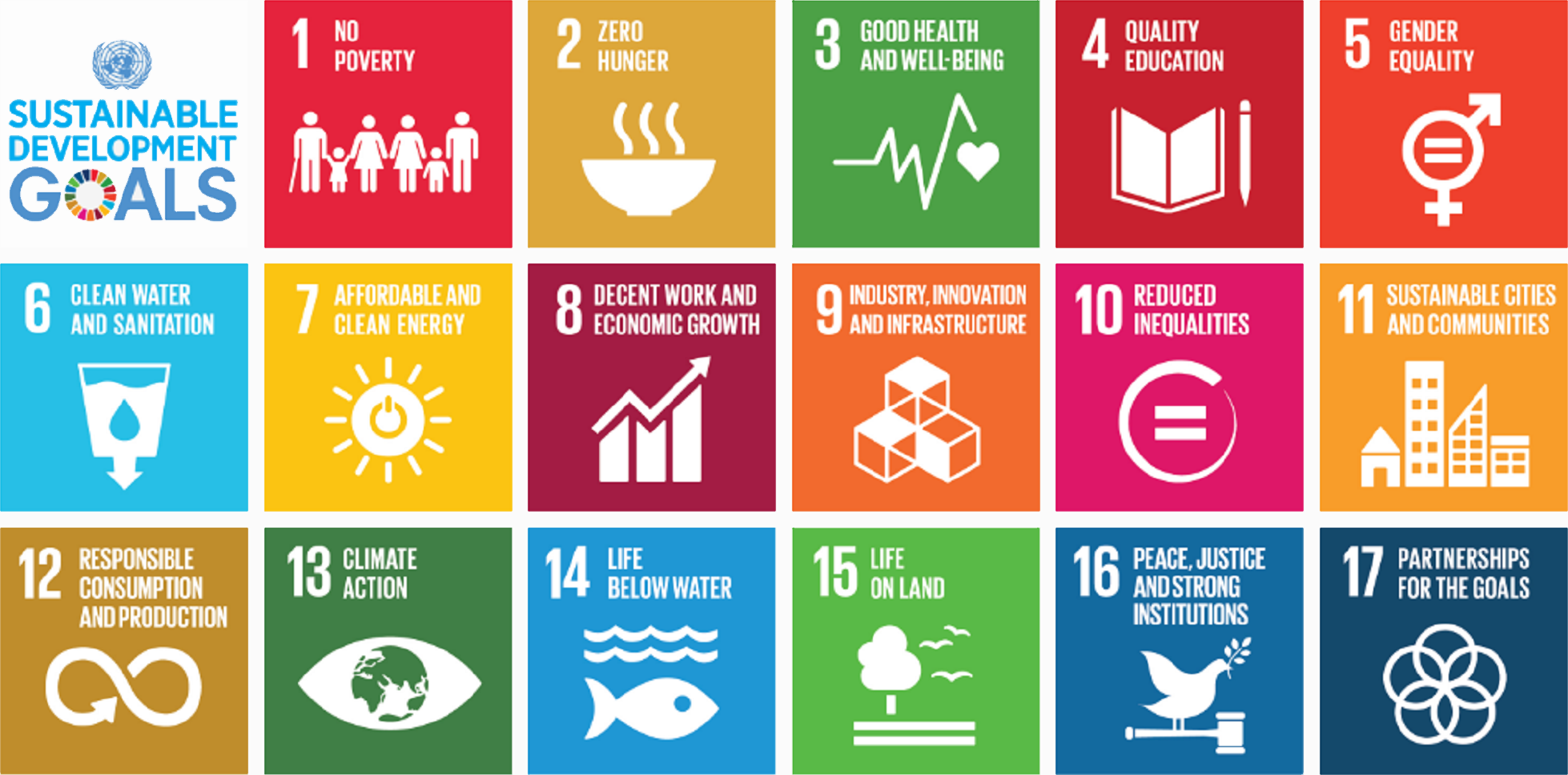
Click the image to visit the UN Sustainable Development Goals site. Please note that Washington Square Ltd cannot be held responsible for the content of this external website.
Not surprisingly in the confusion of regulation and standardisation, the UN SDGs are starting point for several ESG Investment Managers’ investment processes since their launch in 2016.
Institutional investors
An important feature of modern investing has been the increasing role of institutional investors, which have become significant owners of listed companies and broader market indices.
Many institutional investors, including pension funds and asset managers, now incorporate ESG considerations within their investment processes where appropriate.
Current expectations of ESG
Some ESG Investment Managers have stated that clients increasingly expect ESG investments to deliver competitive long-term investment performance alongside responsible investment principles.
There remains a risk of “greenwashing”, where organisations present themselves as having stronger environmental or social credentials than their practices support. As a result, investment managers continue to place increasing emphasis on due diligence, transparency and ongoing engagement with the companies in which they invest.
Investment managers also continue to look for opportunities to diversify portfolios through a range of asset classes. ESG considerations may be incorporated into investments such as infrastructure, renewable energy and other alternative investments where appropriate.
Impact investments will often involve an element of private equity.
Responsible investing is not a panacea and, like all investments, remains subject to market movements, economic conditions and investment risk.
One thing that remains constant, however, is that responsible investing seeks to direct capital towards organisations whose activities align with an investor’s environmental, social and governance objectives, often reflecting themes consistent with the United Nations Sustainable Development Goals.
Investments should always be viewed as medium to long-term commitments.
Additional information is always available on request and we will be posting useful articles on our website links page.